Digital Diner Idea Explosion
I lead a series of training for my faculty called the Digital Diner. The sessions are held throughout the year and focus on a different technology application. Topic get selected based on the conversations I have with teachers throughout the year about their technology interests as well as survey data I collect. Teachers are invited to attend on their prep hour and earn professional development credit for their participation. The "diner" element of the trainings is that my wife cooks a home made treat for each session. There is always a joking question if teachers attend the trainings because the instruction is so good; or if it is because of the food.
Recently I led a Digital Diner session on screencasting during December with my faculty. The session had nine teachers attend throughout the day, including three teachers who attended a Diner for the first time. We used the video capture features of Tech Smith Snagit as our platform for the session.
During the session, I modeled how the Tech Smith Snag it extension worked and showed them the options to save/post them online through Google Drive or YouTube. Then teachers were asked to a create a practice screen cast presentation and share it. We also looked briefly at how to combine presentations with Educannon and add assessment questions throughout their video creations.
My original goal with the session was to teach the teachers how to create brief screencast presentations which could be used to assist absent students in getting caught up or to faciliate learning. opportunities during snow days. (This was why the diner treat for this session was snowcones) However, throughout the day, teachers continued to offer great ideas of ways screencasts could help their students that went way beyond helping students to stay caught up. Among their ideas, were to allow students who master content earlier than their peers to create screencasts of concepts and to have students who serve as tutors in a new peer tutoring program at Lakeside to develop them for the students they are assisting.
Another great idea that came out during the day was to use screencasting as a parent involvement piece. Teachers who create these screen casts and post them online could help our parents to "learn" the content their students are working with in class each day. This could put parents in a better position to assist, and also to have a clearer picture of what their students are learning.
In many ways this was one of the most successful Digital Diners yet. Several teachers attended the Diner for the first time. But it was also a great success because of the explosion of possible classroom applications that the attendees generated. I look forward to seeing where my teachers will take the concept of screencasting and how it will benefit our learning community!
Thursday, January 22, 2015

Sunday, January 4, 2015
Books vs. Movies... That Age Old Debate
My wife and I had a rare night out with some friends this past week. We got to see the film version of Laura Hillenbrand's fantastic work, Unbroken. I read Unbroken, over the summer and it made my top 5 list of books over the summer out of the 25 or so I read. Admittedly, I enjoyed the movie version of Unbroken, although I have to say that the movie certainly does not measure up to the book.
Although the movie itself clocks in at 137 minutes, in that 2 hour plus span, it fails to plumb the depths of the original work on several accounts. At it's core, Unbroken is a tale of redemption, but in watching the opening scenes of Louis Zamperini's life, it paints him as a typical kid who gets himself in some minor spots of trouble; not as the youth tottering on the edge of reform school portrayed in the book who has his life literally saved by his brother's insistence that he join the school track team.
The film version of the book also inadequately captures the tension and fears of bomber pilots hopscotching between various island outposts on bombing runs in the South Pacific. There is no footage of the looming temptation pilots shot down in the ocean faced to attempt to quench their thirst in vain by drinking salt water. There are also only a few shark attacks in the script, and the movie does not capture the desperation of being shot down literally thousands of miles from the nearest atoll without food.
Even the main relationship of the film between Zamperini and the Japanese prison guard Watanabe receives short shrift. While in the book, "the Bird" as Watanabe is known, literally seems to be following Zamperini from prison camp to prison camp across the South Pacific, the movie features only 2 occasions where the are in the same camp at the same time. This fact somewhat limits the scope of the desparation Zamperini must have felt thinking he was finally rid of his tormentor the Bird only to seem him again and again.
Director Angelina Jolie also cuts the movie short without addressing what life was like after Louis Zamperini returned home. There seems to be a suggestion that he returned home and lived happily ever after. According to the book, those first few years back in the United States were anything but fairy tale, since Louis dealt with alcoholism and the scars of war through nightmares and other traumas. Jolie may have been concerned about having to include a religious element in the story-since Zamperini's life changed after attending a Billy Graham crusade in the late 1940's. If Jolie had chosen to include these details in the script, it would have only added more power to the film.
Inspite of its deficiencies and glossing over of some of the important details of Zamperini's story, Unbroken is still a movie worth seeing. I was struck by the fact that my wife and I were the youngest by at least a decade of the partons in the theater that day. Unbroken is a movie that the younger generation needs to see.
Albeit incompletely, the film Unbroken still tells the story of a true American hero. It is my hope that more of the teenage students I teach will go see the movie Unbroken. Hopefully along the way, they will be inspired to wander back to the library to get the rest of this great story by checking out the book version of Unbroken!
Although the movie itself clocks in at 137 minutes, in that 2 hour plus span, it fails to plumb the depths of the original work on several accounts. At it's core, Unbroken is a tale of redemption, but in watching the opening scenes of Louis Zamperini's life, it paints him as a typical kid who gets himself in some minor spots of trouble; not as the youth tottering on the edge of reform school portrayed in the book who has his life literally saved by his brother's insistence that he join the school track team.
The film version of the book also inadequately captures the tension and fears of bomber pilots hopscotching between various island outposts on bombing runs in the South Pacific. There is no footage of the looming temptation pilots shot down in the ocean faced to attempt to quench their thirst in vain by drinking salt water. There are also only a few shark attacks in the script, and the movie does not capture the desperation of being shot down literally thousands of miles from the nearest atoll without food.
Even the main relationship of the film between Zamperini and the Japanese prison guard Watanabe receives short shrift. While in the book, "the Bird" as Watanabe is known, literally seems to be following Zamperini from prison camp to prison camp across the South Pacific, the movie features only 2 occasions where the are in the same camp at the same time. This fact somewhat limits the scope of the desparation Zamperini must have felt thinking he was finally rid of his tormentor the Bird only to seem him again and again.
Director Angelina Jolie also cuts the movie short without addressing what life was like after Louis Zamperini returned home. There seems to be a suggestion that he returned home and lived happily ever after. According to the book, those first few years back in the United States were anything but fairy tale, since Louis dealt with alcoholism and the scars of war through nightmares and other traumas. Jolie may have been concerned about having to include a religious element in the story-since Zamperini's life changed after attending a Billy Graham crusade in the late 1940's. If Jolie had chosen to include these details in the script, it would have only added more power to the film.
Inspite of its deficiencies and glossing over of some of the important details of Zamperini's story, Unbroken is still a movie worth seeing. I was struck by the fact that my wife and I were the youngest by at least a decade of the partons in the theater that day. Unbroken is a movie that the younger generation needs to see.
Albeit incompletely, the film Unbroken still tells the story of a true American hero. It is my hope that more of the teenage students I teach will go see the movie Unbroken. Hopefully along the way, they will be inspired to wander back to the library to get the rest of this great story by checking out the book version of Unbroken!
Thursday, December 18, 2014
Wednesday, December 10, 2014
Hangouts as Mirrors
At the core, I view my role as a library teacher as that of a connector. Sometimes this means connecting a teacher with a set of resources from the web or our physical library. Other times it means connecting them with a teaching strategy or technology and the confidence to go back and use it well with their students in the classroom.
It could mean connecting a student who might not view themself as a reader with that book which will open up the possibilities and the power of literature in their lives. Or it could mean showing them how to use a research source-be it print or electronic that they were not aware existed.
One of my favorite connecting roles is when I can get one of my classes of junior highers in Northwest Arkansas to interact with students or experts around the globe through Skype, or Google Hangouts. At times I will joke with students that I may not be able to fly them to Java, Trinidad, or Transylvania, but I can serve as a conduit to help them interact on the global stage and see their connections to other peoples and parts of this world.
I believe such interactions are truly valuable in shaping who and how our children will interact with the rest of the world in the future. Sometimes, they produce humorous results such as when one of my students interacted for the first time with a peer who wore a headscarf in Java. She asked if she wore the piece of clothing when she slept.
 Other times, such as during our Skype with a class in Trinidad last week, the results are much more thought provoking. During this visit, the concept of the American melting pot came up. We were discussing the multicultural elements of Trindidad's soceity including celebrating holidays across a much wider spectrum of faiths than in the United States. In Trinidad, Diwali, Ramadan, as well as Christmas and Easter are celebrated on a national scale.
 During our conversation, one member of the class in Trinidad suggested that while the United States is culturally diverse, although it may not necessarily be a true melting pot. This notion caused a palpable pause in the room for my students that they truly stopped to consider.
The discussion continued, and my students looked around the room at their peers. After a few minutes, they started to verbalize their feelings about the assertion. Some of them suggested students in America may sit in the classroom and learn next to students from other backgrounds, but when they are self selecting their seating, they tend to choose to sit with peers who have a similar heritage.

This interaction illustrates one of the key benefits of connecting learners with their peers around the world. Sometimes they provide a different perspective on America that is both refreshing and thought provoking. It can literally produce a new level of understanding. Almost like stopping to look in a mirror and noticing something about yourself that you had not realized before.
Follow Golden Eagle Library on Twitter: @goldeneaglelmc
Follow Brian on Twitter: @brian_librarian
It could mean connecting a student who might not view themself as a reader with that book which will open up the possibilities and the power of literature in their lives. Or it could mean showing them how to use a research source-be it print or electronic that they were not aware existed.
One of my favorite connecting roles is when I can get one of my classes of junior highers in Northwest Arkansas to interact with students or experts around the globe through Skype, or Google Hangouts. At times I will joke with students that I may not be able to fly them to Java, Trinidad, or Transylvania, but I can serve as a conduit to help them interact on the global stage and see their connections to other peoples and parts of this world.
I believe such interactions are truly valuable in shaping who and how our children will interact with the rest of the world in the future. Sometimes, they produce humorous results such as when one of my students interacted for the first time with a peer who wore a headscarf in Java. She asked if she wore the piece of clothing when she slept.
During our conversation, one member of the class in Trinidad suggested that while the United States is culturally diverse, although it may not necessarily be a true melting pot. This notion caused a palpable pause in the room for my students that they truly stopped to consider. The discussion continued, and my students looked around the room at their peers. After a few minutes, they started to verbalize their feelings about the assertion. Some of them suggested students in America may sit in the classroom and learn next to students from other backgrounds, but when they are self selecting their seating, they tend to choose to sit with peers who have a similar heritage.
This interaction illustrates one of the key benefits of connecting learners with their peers around the world. Sometimes they provide a different perspective on America that is both refreshing and thought provoking. It can literally produce a new level of understanding. Almost like stopping to look in a mirror and noticing something about yourself that you had not realized before.
Follow Golden Eagle Library on Twitter: @goldeneaglelmc
Follow Brian on Twitter: @brian_librarian
Tuesday, December 9, 2014
Holiday Hangout A Hit
Last year, one of my favorite outside of school collaborations was with the "other" Lakeside in Hot Springs. Stony Evans, is a friend of mine from graduate school at the University of Central Arkansas, and is the secondary school media specialist there. We have been talking literally for a couple of years about how cool it would be to do collaborative online projects between the two Lakeside schools.
Last year in the spring, we started to make this a reality. We coined the term "Lakeside Squared" for the Google Hangouts we have held. Our first one was focused on Veronica Roth's novel Divergent. We held a hangout to discuss the book between Lakeside Hot Springs book club and a group of students at Springdale Lakeside who had read that title. Both groups of students enjoyed participating in the Hangout. They liked the opportunity to share the results of the faction quizzes and other activities they had done related to the book. The event was such a success that we have continued the Lakeside Squared Google Hangout tradition this year.
 Our first Lakeside Squared Hangout this year was a virtual readout during Banned Book week. Students and teachers from both campuses read excerpts from banned titles such as The Hunger Games, 1984 and The Giver.
A recent performance by our choir in the library inspired the latest edition of the Lakeside Squared Hangout. Almost immediatley after hearing our choir sing in the library, I contacted Stony with the idea of a Holiday Hangout. I wondered, could we not magnify the reach of both schools' music programs and infuse some extra holiday spirit into some students lives by conducting a Hangout between the two schools?
 The Holiday Hangout ended up including 2 songs performed by one of Springdale Lakeside's choirs. Stony, the media specialist in Hot Springs is also a very accomplished musician, so when his campus' choir was unable to perform, he stepped right in to perform the Christmas theme music from Charlie Brown on the saxophone. I concluded the Hangout by reading a holiday story I learned from my dad, O. Henry's The Gift of the Magi.
 One of concerns about the Hangout going in was whether the sound quality would try capture the beauty of the performances. The sound ended up being one of the pleasant surprises of the Hangout as people at both locations remarked about how clear the performances were.
Hangouts are such a powerful connecting tool for our students and teachers. I can't wait to work with my colleague at Lakeside Hot Springs to develop our next Lakeside Squared Hangout opportunity!
Lakeside Junior High Library Springdale Twitter @GoldenEagleLMC
Brian Johnson Twitter @brian_librarian
Stony Evans Twitter @stony12270
Last year in the spring, we started to make this a reality. We coined the term "Lakeside Squared" for the Google Hangouts we have held. Our first one was focused on Veronica Roth's novel Divergent. We held a hangout to discuss the book between Lakeside Hot Springs book club and a group of students at Springdale Lakeside who had read that title. Both groups of students enjoyed participating in the Hangout. They liked the opportunity to share the results of the faction quizzes and other activities they had done related to the book. The event was such a success that we have continued the Lakeside Squared Google Hangout tradition this year.
Our first Lakeside Squared Hangout this year was a virtual readout during Banned Book week. Students and teachers from both campuses read excerpts from banned titles such as The Hunger Games, 1984 and The Giver. A recent performance by our choir in the library inspired the latest edition of the Lakeside Squared Hangout. Almost immediatley after hearing our choir sing in the library, I contacted Stony with the idea of a Holiday Hangout. I wondered, could we not magnify the reach of both schools' music programs and infuse some extra holiday spirit into some students lives by conducting a Hangout between the two schools?
One of concerns about the Hangout going in was whether the sound quality would try capture the beauty of the performances. The sound ended up being one of the pleasant surprises of the Hangout as people at both locations remarked about how clear the performances were. Hangouts are such a powerful connecting tool for our students and teachers. I can't wait to work with my colleague at Lakeside Hot Springs to develop our next Lakeside Squared Hangout opportunity!
Lakeside Junior High Library Springdale Twitter @GoldenEagleLMC
Brian Johnson Twitter @brian_librarian
Stony Evans Twitter @stony12270
Wednesday, December 3, 2014
The G.E.M.M.
The Golden Eagle Monthly Media Report (G.E.M.M.) for October-November 2014 is now available! Check out some of the great things that have been going on in the Lakeside Media Center lately!
The G.E.M.M.
The G.E.M.M.
Wednesday, November 12, 2014
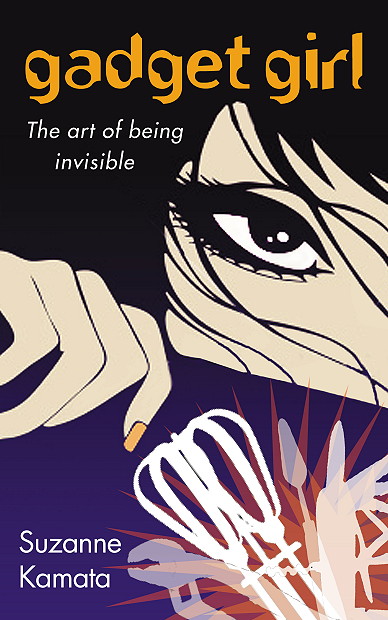
Manga is one the most popular genres at Lakeside, taking up most of the spaces on the monthly top ten checkout list. I have read about the role manga can play as a “gateway read”- that it can get reluctant readers to develop a lifelong love of reading more traditional text; although I have rarely seen it in action.
In my experience, manga readers usually just stick to manga. With Gadget Girl, I think I may have found a book that may truly serve as a gateway to move manga readers towards more traditional novels!
Gadget Girl is a realistic fiction novel about 14 year old Japanese American named Aiko, who has cerebral palsy. Because of her condition, Aiko is socially awkward and feels that she will never catch the eye of the boys. She lives with her mother, a sculptor, who travels around putting her art in galleries to make ends meet. Her father has long ago returned to Japan to work as an indigo farmer and is no longer in the picture.
The novel opens with Aiko’s uncomfortable realization that her cerebral palsy has led to her mother’s fame-she is the muse for her mother’s most famous sculptures. Aiko responds to this realization by distancing herself from her mother and her artwork. Not surprisingly, Aiko’s mother’s announcement that she has been invited to show her work in Paris, is met with a less than enthusiastic response.
About the time Aiko learns of her mother’s latest art show, she starts to carve out her own identity by drawing a series of manga novels called Gadget Girl. These novels, which are distributed by her friends, help her to develop an anonymous following on the internet of her own and shape her own identity in real time. The main character of the novels Gadget Girl is Aiko’s alter ego: self confident, nimble, easily capturing the interest of boys. While in Paris, she also draws the attention of a young French waiter who shares her interest in manga.
Among Gadget Girl’s other selling points are that the work weaves in a strong element of reconciliation as Aiko seeks to reconnect with her father in Japan and to redefine her relationship with her mother and her art.
With its likeable, unique heroine, coming of age elements including a believable romance and the possibility of a sequel, Gadget Girl may just be the book to encourage our manga readers to make the jump to more traditional text(s)! Our fans of more traditional text will enjoy the novel’s insights into the manga genre as well. Some brief mild language and romance. Highly recommended for middle school readers and up.
Subscribe to:
Posts (Atom)