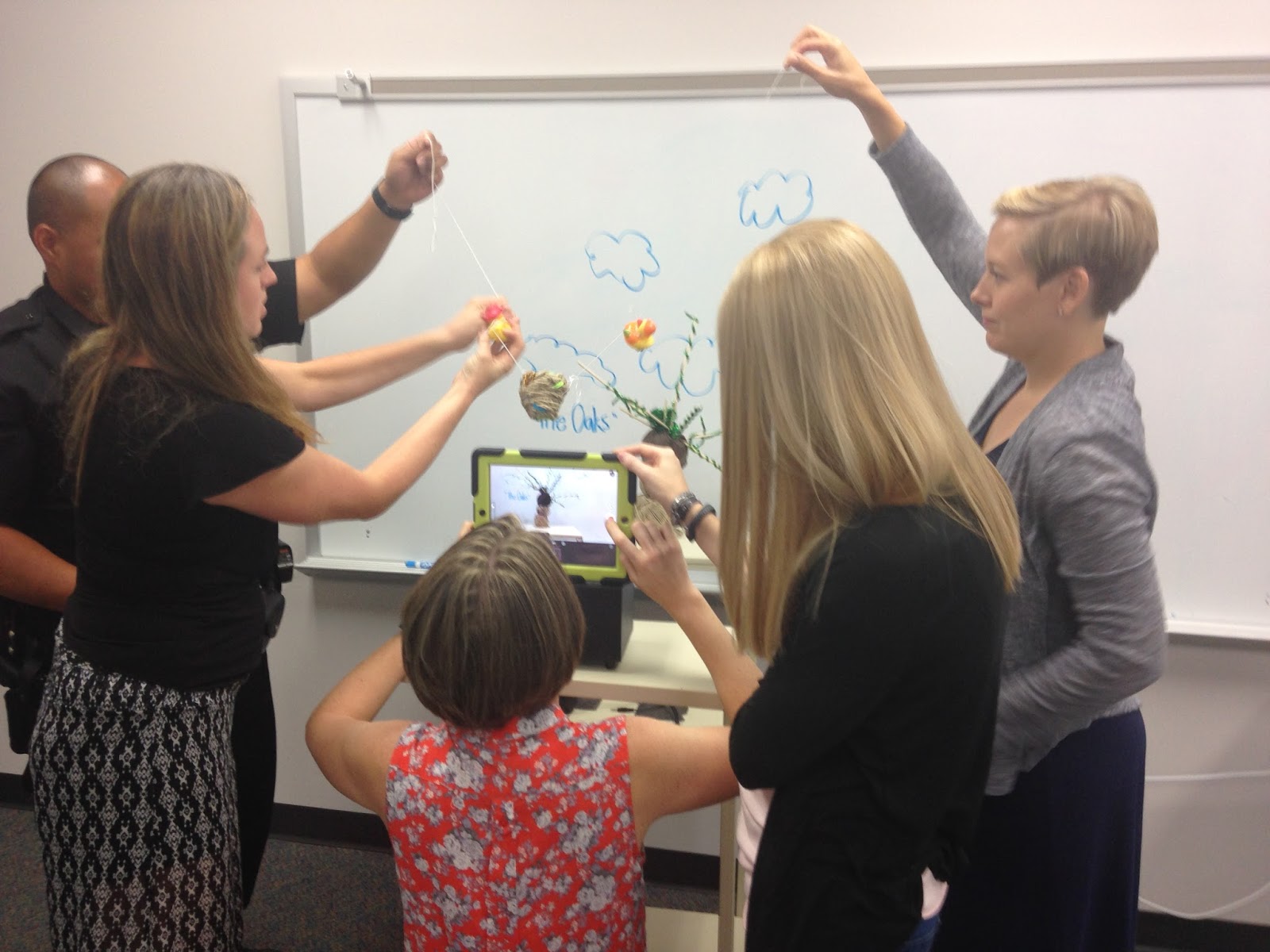
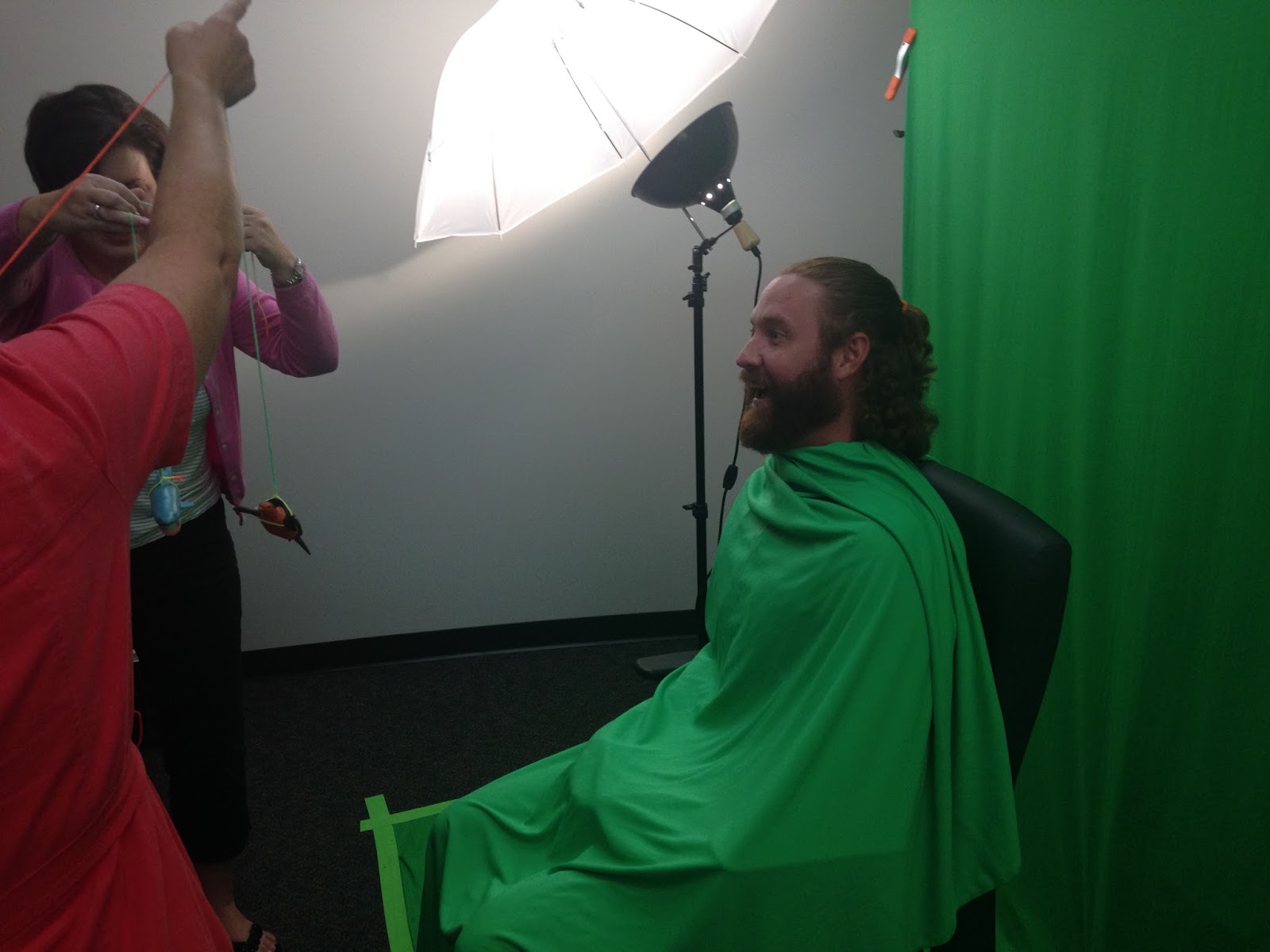
It has been one of my goals this year to hold more themed events based on the ALA Library calendar. To be honest, at times I have let these events sneak up on me. This has made me a little bit more dedicated to pulling some celebrations off.
This year's Teen Tech Week has been a great celebration. Here is a top 8 list of ways to have a successful Teen Tech and probably the suggestions here would apply to any library event.
1. Collaborate outside of your physical building.
 For a couple of years now, I have had the privilege of staging Google Hangouts with my friend and colleague, Stony Evans at Lakeside Hot Springs High School. We have had "Lakeside Squared" Hangouts based on books, Banned Book Week, and dramatic as well as musical performances. For this year's Teen Tech Week, we decided to hold a Maker show and tell Hangout. Our students took turns sharing their maker creations including robots, coding, creature makeup and a windmill.
2. Seek out different demographics.
Our libraries need to be safe places for all of our patrons and our programming should reflect that. The Squishy Circuits session we held on Friday during lunch was a big hit with some of our male students who are typically "too cool" for library programs. I am not sure if it was the electricity, or the play dough, or the combination of both that drew them in for this event.
3. Hold a prize giveaway.
Maybe this is a given at this point, but part of drawing in a larger crowd to library events is to give away candy and prizes. For the Squishy Circuits event, we gave away a couple pairs of headphones, some candy and fancy pens. They were a hit!
4. Invite your staff to events.
 Since most of our students ride a bus to school, staying after school is not an option. As a result, most of the programming I present is either before school or at lunchtime. This year, I have made it a point to invite both staff and students to events that traditionally have targeted students. For the Squishy Circuits maker challenge on Friday, I had some teachers attend and build the circuits right along with students. (Thanks to Mr. Scott and Mr. Stallings for participating!) It provides a great opportunity for teachers and students to interact outside of the classroom.
5. Collaborate with your teaching peers to present programming-look for ways to get them involved.
 One reason why Teen Tech week was so successful was the help and support I received from my faculty to develop the event. Our Family and Consumer Science teacher, Mrs. Coston, also let me borrow her kitchen to mix up the non conductive Playdough that was needed for the Squishy Circuits.One of our instructional assistants Mr. Lara took pictures of the Maker Hangout and Squishy Circuits events. He also kept participants well supplied with materials during the Squishy circuits event on Friday.
6. Collaborate with student aides as coaches/tech mentors
 Before each Maker Challenge, I employ my student aides to test/troubleshoot the activities. Not only does this get their buy in to attend the event, but they also recruit a few of their friends to attend which improves out turn out. Trying out the maker activities ahead of time also gave them the confidence to go and teach others. Since they have played the roll of activity testers before, several of them have made it a norm to not only attend the event, but also to jump right in and teach their peers at the event.
7. Subtly embed learning in the event.
 Aside from the fun of completing a Maker Challenge, I also look for ways to embed teachable moments. For the Squishy Circuits challenge, students had lots of fun building circuits of out Playdough, but they also were learning some basic skills about how electricity flows. One of the concepts was the idea that they could build a short circuit-that electricity flows through the path of least resistance if the conductive dough pieces were touching instead of flowing through the wires.
Students also had opportunities to try out a motor, different battery sizes as well as both alligator clips and wires. Having a variety of materials on hand encouraged students to experiment and innovate. This only added to the fun as students searched for the best combinations of batteries and cabling. The students were so engaged in the fun of building the circuits that they did not realize that they were learning!
8. Reflect on the event and seek improvements
Overall, the two Teen Tech week events were a success, but there are still areas that could be improved. For the Squishy Circuits, it would have been more effective to have sections of wire precut before students arrived for first lunch. This would have given students more chances to innovate their designs. For second lunch, we were able to have enough wire precut for students to start right away. This gave students more time and they developed some pretty innovative designs-they made a snake, an ugly snowman, and a fish!
It also would have given students more confidence if there were some prototypes laid out to help them start thinking about their designs. Next time, I would like to employ my student aides to help develop more prototypes and have their work laid out on the tables for event participants to see. This would also help to prepare student aides to have more confidence to teach once they had already developed some working prototypes.
Follow me on Twitter:@brian_librarian
Follow the Golden Eagle Library
On Twitter: @GoldenEagleLMC
On Instagram: @Goldeneaglelmc
Contact me by email: bjohnson3@sdale.org
This year's Teen Tech Week has been a great celebration. Here is a top 8 list of ways to have a successful Teen Tech and probably the suggestions here would apply to any library event.
1. Collaborate outside of your physical building.
 For a couple of years now, I have had the privilege of staging Google Hangouts with my friend and colleague, Stony Evans at Lakeside Hot Springs High School. We have had "Lakeside Squared" Hangouts based on books, Banned Book Week, and dramatic as well as musical performances. For this year's Teen Tech Week, we decided to hold a Maker show and tell Hangout. Our students took turns sharing their maker creations including robots, coding, creature makeup and a windmill.
2. Seek out different demographics.
Our libraries need to be safe places for all of our patrons and our programming should reflect that. The Squishy Circuits session we held on Friday during lunch was a big hit with some of our male students who are typically "too cool" for library programs. I am not sure if it was the electricity, or the play dough, or the combination of both that drew them in for this event.
3. Hold a prize giveaway.
Maybe this is a given at this point, but part of drawing in a larger crowd to library events is to give away candy and prizes. For the Squishy Circuits event, we gave away a couple pairs of headphones, some candy and fancy pens. They were a hit!
4. Invite your staff to events.
 Since most of our students ride a bus to school, staying after school is not an option. As a result, most of the programming I present is either before school or at lunchtime. This year, I have made it a point to invite both staff and students to events that traditionally have targeted students. For the Squishy Circuits maker challenge on Friday, I had some teachers attend and build the circuits right along with students. (Thanks to Mr. Scott and Mr. Stallings for participating!) It provides a great opportunity for teachers and students to interact outside of the classroom.
5. Collaborate with your teaching peers to present programming-look for ways to get them involved.
 One reason why Teen Tech week was so successful was the help and support I received from my faculty to develop the event. Our Family and Consumer Science teacher, Mrs. Coston, also let me borrow her kitchen to mix up the non conductive Playdough that was needed for the Squishy Circuits.One of our instructional assistants Mr. Lara took pictures of the Maker Hangout and Squishy Circuits events. He also kept participants well supplied with materials during the Squishy circuits event on Friday.
 6. Collaborate with student aides as coaches/tech mentors

7. Subtly embed learning in the event.
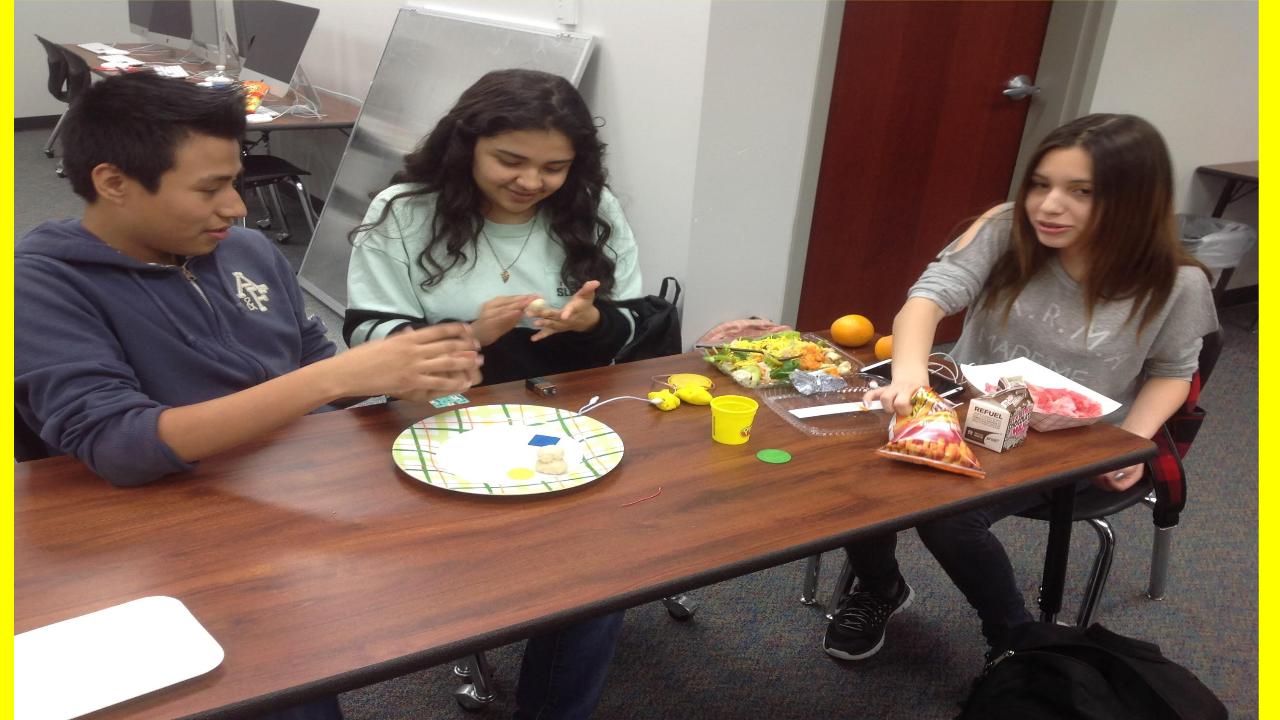
Students also had opportunities to try out a motor, different battery sizes as well as both alligator clips and wires. Having a variety of materials on hand encouraged students to experiment and innovate. This only added to the fun as students searched for the best combinations of batteries and cabling. The students were so engaged in the fun of building the circuits that they did not realize that they were learning!
8. Reflect on the event and seek improvements
Overall, the two Teen Tech week events were a success, but there are still areas that could be improved. For the Squishy Circuits, it would have been more effective to have sections of wire precut before students arrived for first lunch. This would have given students more chances to innovate their designs. For second lunch, we were able to have enough wire precut for students to start right away. This gave students more time and they developed some pretty innovative designs-they made a snake, an ugly snowman, and a fish!
It also would have given students more confidence if there were some prototypes laid out to help them start thinking about their designs. Next time, I would like to employ my student aides to help develop more prototypes and have their work laid out on the tables for event participants to see. This would also help to prepare student aides to have more confidence to teach once they had already developed some working prototypes.
Follow me on Twitter:@brian_librarian
Follow the Golden Eagle Library
On Twitter: @GoldenEagleLMC
On Instagram: @Goldeneaglelmc
Contact me by email: bjohnson3@sdale.org